Choosing the Right Kitchen Materials: A Guide for Longevity and Style
Kitchen materials directly affect durability, maintenance, and long-term performance. Beyond appearance, the right materials ensure resistance to moisture, heat, daily wear, and frequent use— while maintaining a consistent, refined finish over time. For homeowners investing in modular kitchens, material quality is a primary factor in how well a kitchen performs and ages.
Häcker approaches kitchen design with a focus on engineered materials, precision manufacturing, and long-term reliability. Every surface, structure, and mechanism is selected to deliver both function and durability without compromising design.
Cabinet Materials: Performance Meets Design
Cabinet fronts define both the look and resilience of a kitchen. Common premium options include:
- Laminates – durable, and suitable for high-use kitchens
- Lacquered finishes – smooth, refined finishes available in extensive colour ranges
- Veneers – natural wood surfaces that add warmth and texture
Häcker enhances these materials with PerfectSense surface technology, offering scratch-resistant matte and high-gloss finishes with consistent colour stability. PuResist edging technology improves moisture resistance, an essential feature in humid environments such as Sri Lanka, helping cabinet fronts maintain structural integrity over time.
Carcase Construction: Structural Reliability
The carcase forms the structural core of the kitchen and has a direct impact on stability and hygiene. Häcker’s Designer Carcase range features uniform internal and external finishes in options such as titanium, crystal white, light grey, and natural fine oak.
High-density boards, sealed edges, and precision manufacturing ensure moisture resistance, dimensional stability, and long-term durability. Uniform interiors also improve cleanliness and simplify maintenance.
Countertops: Durability Under Daily Use
Worktops must withstand heat, moisture, impact, and frequent cleaning. Common high-performance options include:
- Quartz – non-porous, stain-resistant, and low maintenance
- Granite – heat-resistant with natural pattern variation
- Ceramic / Sintered stone – highly durable, scratch- and heat-resistant
- High-pressure laminates – economical and resilient
Quartz remains a preferred choice for its hygiene and consistency, while ceramic and sintered stone surfaces offer maximum durability with a modern aesthetic. Selection should be based on cooking habits, maintenance expectations, and design requirements.
Sustainable Material Standards
Material selection increasingly includes environmental considerations. Häcker incorporates PurEmission technology, a low-formaldehyde solution that supports improved indoor air quality. This is complemented by CO₂-neutral production and compliance with strict European manufacturing standards, ensuring responsible sourcing and long-term safety.
Hardware and Internal Mechanisms
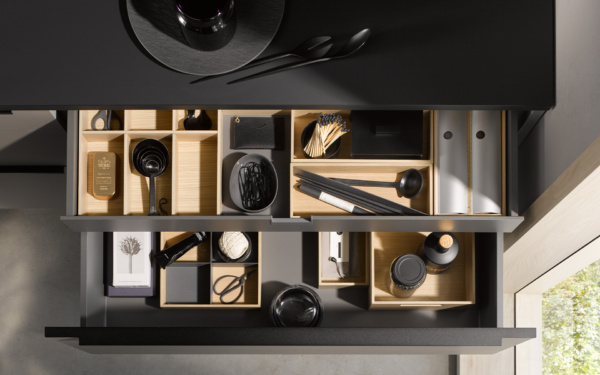
Material quality extends to internal components. Drawers, hinges, and pull-out systems must perform reliably under constant use. Häcker’s SlimLine (SLD) drawer system, soft-close mechanisms, and metal fittings are engineered for stability, smooth movement, and long service life.
Making the Right Material Choices
Kitchen materials determine how well a space functions over time. High-quality surfaces, engineered structures, and durable mechanisms reduce maintenance, improve hygiene, and extend lifespan. When supported by advanced manufacturing and material technology, these choices result in kitchens that remain functional, consistent, and visually refined for years.